Trying to make sense of Oak Park housing market headlines? You’re not alone. Prices, inventory, and days on market can change quickly, and it helps to read the numbers with local context. In this guide, you’ll learn which metrics matter most, how they behave in Oak Park’s neighborhoods and property types, and what they mean for your next move. Let’s dive in.
Oak Park market snapshot, at a glance
When you look at a market update, focus on a consistent set of indicators and timeframes. For Oak Park, the most useful cadences are the last 30 days for a quick pulse, the last 90 days for a short trend, and rolling 12 months for a smoothed view. Year-over-year comparisons help you control for seasonality.
Core indicators to watch:
- Active inventory and new listings: How many homes are available today and how many came to market recently.
- Months of inventory (MOI): Active listings divided by average monthly closed sales. Under 3 months often points to a seller-leaning market. Around 4 to 6 months is balanced. Over 6 months favors buyers.
- Median sale price: The middle sale price of closed transactions over a set period. Pair it with the number of closings for context.
- Days on market (DOM): The time from listing to contract. Median DOM helps avoid outliers.
- Sale-to-list ratio: Sale price divided by the final list price, expressed as a percent. It signals pricing power.
- Price per square foot: Useful for similar homes or condos in the same area.
Always note whether a report uses the contract date or closing date. DOM is best measured to contract date. Price is best measured at closing.
What the numbers mean
Inventory and MOI
MOI tells you about balance between buyers and sellers. Low MOI usually means quicker sales and tighter negotiations. Higher MOI signals more choice and more room to negotiate. In Oak Park, MOI can vary by property type and neighborhood, so read it in segments.
Median sale price
The median helps you avoid skew from a few very high or low sales. Use rolling 3- or 12-month medians to smooth short-term noise. Pair median price with the number of closed sales so you can judge whether changes reflect real trend or just small sample sizes.
Days on market
DOM captures market speed. Shorter DOM usually means strong demand or sharp pricing. Longer DOM can mean overpricing or a slower segment. In Oak Park, DOM often varies by proximity to transit, historic status, and renovation level.
Sale-to-list ratio
A ratio near or above 100 percent suggests competitive pricing and tight inventory. Ratios below 100 percent indicate that buyers have leverage or that listings are coming to market too high. Look at the share sold at or above list price and the share with price reductions for a fuller picture.
Price per square foot
$/sq ft is most useful for comparing similar homes. For historic homes, $/sq ft may understate the value of craftsmanship and lot size. In condos, $/sq ft can be more apples-to-apples within the same building or complex.
Price reductions and timing
Watch the percent of listings with at least one price cut, and the median days to first reduction. A rising share of reductions or earlier cuts can signal softening demand. Stable pricing with fewer reductions usually supports firmer list prices.
Pending, closed, and active mix
A higher pending-to-active ratio hints at future absorption. If pendings are keeping pace with new listings, supply may stay tight. If active listings are building faster than pendings, buyers may gain leverage soon.
Segmented snapshots to watch
Single-family homes
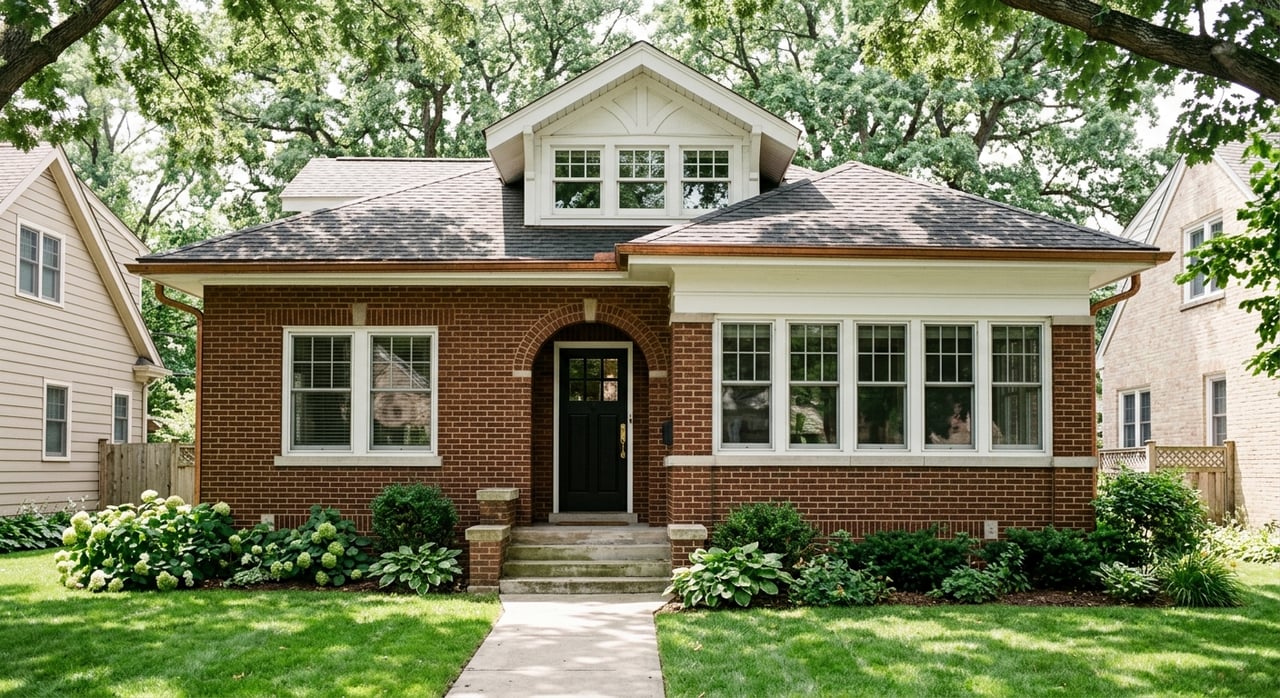
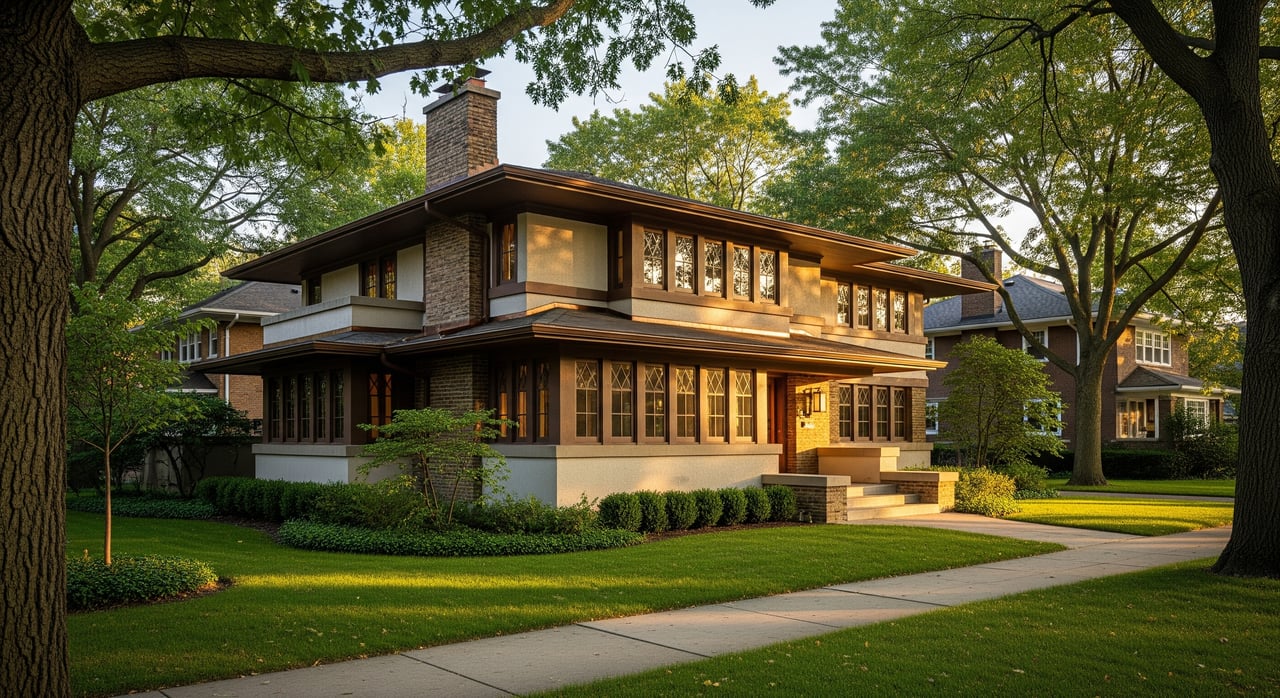
Oak Park’s single-family stock includes early 20th-century bungalows, four-squares, and Prairie-style homes. These homes often show stronger price stability and seasonal swings in supply. Well-maintained properties near transit or parks tend to see shorter DOM and stronger sale-to-list results. Upper-end historic homes can show longer DOM and wider price-per-square-foot ranges due to lot size and renovation scope.
Condos and co-ops
Condos can move faster on DOM and tend to be more sensitive to mortgage rate changes. Newer infill units or recent conversions add supply, which can shift MOI quickly. In cooling periods, condos typically show a higher share of price reductions than single-family.
Small multi-family (2–6 units)
Two-flats to six-flats are driven by investor math, like rent trends and cap rates. If local rents are steady and financing costs are favorable, these buildings can trade quickly. When rates rise, investor demand may cool, increasing DOM and MOI for income properties.
By price band
Segmenting by quartiles helps you see where competition is hottest:
- Entry-level: Often condos or smaller single-family homes. DOM can be short when rates are stable because more buyers qualify. Watch the share sold at or above list.
- Move-up / mid-market: Typical Oak Park family homes. Inventory here often sets the tone for overall MOI.
- Upper-end: Larger historic homes and high-end renovations. Expect longer DOM, wider $/sq ft, and a heavier focus on property condition and lot.
Micro-location effects
- Historic districts: Homes in designated areas can carry premiums due to architectural character and preservation. Rules can also limit exterior changes, shaping the buyer pool.
- Transit access: Easy walks to CTA Green Line or Blue Line stops and the Metra Oak Park station often lower DOM and support stronger pricing.
- Border effects: Blocks near River Forest or adjacent suburbs can show small price differentials based on micro-location.
- New condo supply: New developments or recent conversions add inventory, which can affect condo MOI and pricing.
Local drivers shaping Oak Park
Housing stock and character
Oak Park’s identity is tied to historic architecture, including Prairie-style design and early 20th-century homes. Condition and authenticity matter. Buyers value preserved features and updates to mechanical systems.
Transit and commute
Multiple CTA and Metra options give Oak Park strong commuter access to Chicago. Homes near train stations often list and sell faster, especially in segments with limited supply.
Schools and amenities
School district boundaries and proximity to parks, downtown Oak Park, and cultural amenities influence demand. Use neutral, factual school boundary details in your analysis and avoid subjective quality claims.
Preservation and renovation
Historic preservation rules can shape renovation choices and timelines. New-construction infill is limited, so resale inventory and renovations play a larger role in supply.
Supply pipeline and broader economy
New condo conversions or building rehabs can shift MOI in specific segments. Mortgage rates and regional job trends in the Chicago metro area impact buying power and urgency.
Practical takeaways for sellers
- Price with your segment’s MOI: Under 3 months suggests you can price confidently. Over 6 months calls for careful pricing and a concession plan.
- Watch DOM and reductions: If DOM is rising and price cuts are common in your segment, consider pricing at market rather than planning later reductions.
- Leverage micro-location: Proximity to transit or a historic district can support a shorter marketing window and stronger pricing if the home is presented well.
- Present the right details: Highlight preserved architectural features, updates to electrical, plumbing, roof, and HVAC, plus walkability to transit and amenities.
- Timing strategy: Spring typically brings more listings and buyers, but serious buyers shop year-round. Choose timing based on your goals and current MOI.
- Negotiation posture: Track the sale-to-list ratio and the share sold at or above list in your price band. Stronger ratios call for firmer negotiation.
Practical takeaways for buyers
- Prepare for low MOI: When inventory is tight, get pre-approved, tour quickly, and set realistic contingency timelines.
- Use DOM and reductions: Longer DOM or a recent price cut can open the door to concessions or closing cost credits.
- Compare like-for-like: Use $/sq ft within the same micro-area and property type. For historic homes, factor in craftsmanship, lot size, and renovation depth.
- Plan inspections: Older homes benefit from thorough mechanical, roof, foundation, and sewer evaluations. Budget for near-term maintenance.
- Location trade-offs: Homes close to CTA or Metra may draw more offers. Balance convenience with space, condition, and budget.
- Investor lens for 2–6 units: Underwrite rents, taxes, and maintenance. Track cap rate trends and financing terms to set your max offer.
Suggested visuals for this post
- Price vs supply: A dual-axis chart with 12-month rolling median sale price and active inventory. Label period, data source, and sample size.
- Months of inventory: A 12–24 month line chart showing MOI by property type. Include clear thresholds for buyer/balanced/seller ranges.
- Market speed by type: A bar chart with median DOM for single-family, condo/co-op, and small multi-family. Add sample sizes.
- Sale-to-list by price band: A quartile bar or boxplot showing median sale-to-list ratio by price band. Note small-sample cautions for upper-end.
- Distribution by price: A histogram of closed sales by price bands to show where activity concentrates.
Sources and method
For accurate Oak Park market readings, pull data from the local MLS for active, pending, and closed listings and calculate medians with consistent date fields. Use the Village of Oak Park for preservation context and permits, the Cook County Assessor for parcel details, the American Community Survey for housing characteristics, and regional association reports for broader context. Define the geography precisely to the Village of Oak Park, use medians where distributions are skewed, and show sample sizes for every metric.
Ready to plan your move?
If you want a clear, current snapshot tailored to your home or search, get a segmented report for your property type, price band, and micro-location. As a local advisor with institutional marketing reach, Ed Bellock will help you read the numbers, set a smart strategy, and execute with confidence.
FAQs
Is it a buyer’s or seller’s market in Oak Park right now?
- Check months of inventory and the median sale-to-list ratio for your segment; under 3 months of inventory leans seller, around 4–6 months is balanced, and above 6 months favors buyers.
How long will my Oak Park home take to sell?
- Look at the median DOM for your property type and price band, then adjust for condition, proximity to transit, and historic status to set realistic timing.
Will I get full price or above list for my home?
- Review recent sale-to-list ratios and the share sold at or above list in your segment; strong ratios and tight inventory support firmer pricing.
Should I list in spring or wait?
- Spring often brings more listings and buyers, but seasonality varies; weigh your timeline against current MOI, DOM, and mortgage rate expectations.
How do condos compare to single-family homes in Oak Park?
- Condos often show faster DOM and more sensitivity to rates, while single-family homes tend to hold price better with seasonal inventory swings.
What are the biggest risks when buying an older Oak Park home?
- Plan thorough inspections of mechanicals, roof, foundation, and sewer, and understand preservation guidelines that may influence renovation choices.