Wondering how much outdoor living space really matters in Elmwood Park? In a compact village with older homes, practical yards often matter more than oversized ones. If you are buying or selling here, it helps to know what makes a backyard or patio feel useful, attractive, and easier to maintain. Let’s dive in.
Why outdoor space looks different here
Elmwood Park is a dense, mostly owner-occupied community, with 65.2% of homes owner-occupied and a median owner-occupied home value of $339,300. The housing stock also trends older, with a median year built of 1956 and many homes built before 1960. That combination often means outdoor space is shaped by established lot lines, garages, and practical rear-yard layouts.
Village standards allow single-family detached lots that can be relatively compact depending on the zoning district. Minimum lot area can range from 6,200 square feet down to 3,125 square feet, and minimum lot widths can range from 50 feet to 25 feet. In simple terms, many Elmwood Park backyards work best when they are planned for efficiency and day-to-day use.
What buyers notice in Elmwood Park yards
When buyers walk through a home, they usually respond to outdoor areas that feel easy to understand. A clean patio, clear path to the garage, and a yard with defined purpose can make the space feel more livable. In Elmwood Park, that often matters more than having a large but awkward backyard.
Because so many homes sit on compact lots, buyers may look closely at how the outdoor area functions. They often notice whether there is room to sit, grill, garden, or move between the house and garage without obstacles. Even small improvements can help a yard feel more complete.
Patios and hardscape often fit the housing pattern
Public permit records show that patio work, brick paver patio work, decks, fences, railings, and gazebo or pergola permits are all part of the local project mix. That points to a practical pattern in Elmwood Park outdoor living. Homeowners often invest in spaces that are durable, structured, and easier to maintain.
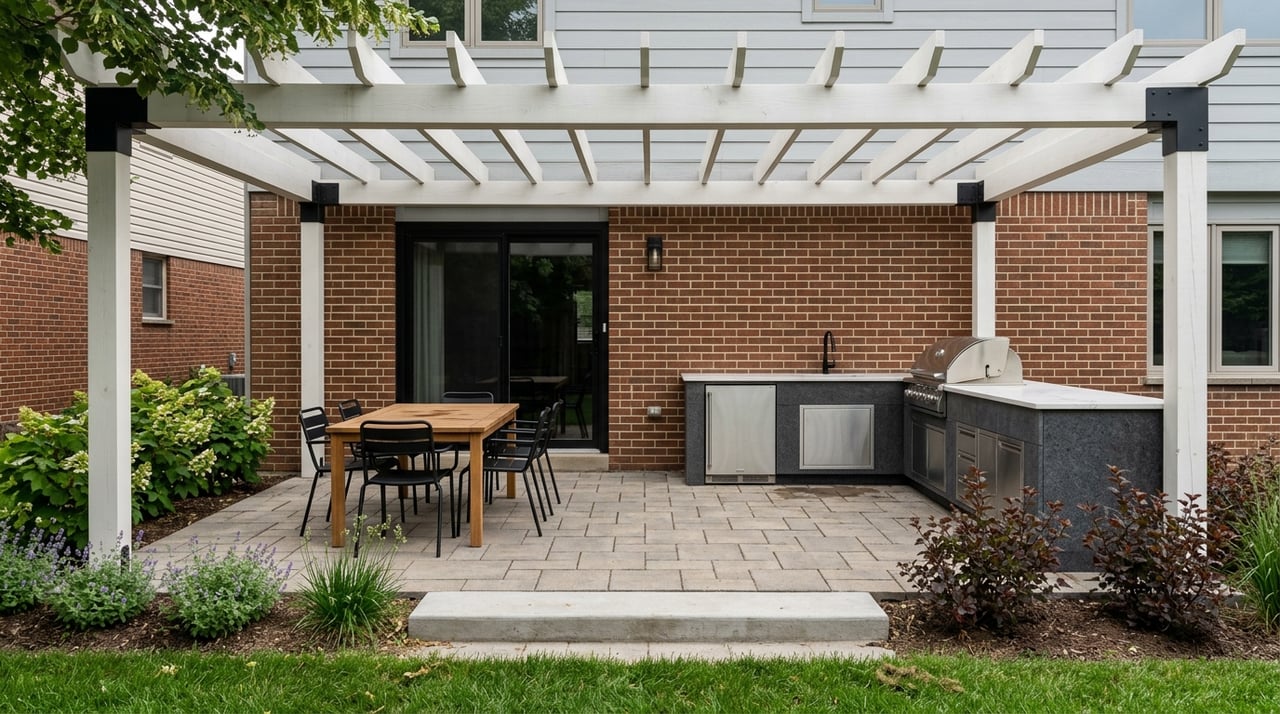
For many properties, a patio can be one of the strongest outdoor features. It creates clear usable space without asking for a large yard footprint. That can be especially helpful in a village where lot dimensions and older housing layouts may leave limited room for expansive landscaping.
Why patios photograph well
A well-defined patio tends to show clearly in listing photos. Buyers can quickly picture a dining set, a few chairs, or a grilling area. That visual clarity can make the outdoor space feel more valuable.
Patios can also help a yard look tidy and intentional. In a resale setting, that matters because buyers often respond well to spaces that seem ready to use from day one.
Decks, pergolas, and fences are common upgrades
Deck permits and gazebo or pergola permits appear in recent village records, which suggests these are familiar outdoor projects in Elmwood Park. These features can add comfort and shape to a yard without requiring a major footprint. They can also help define different uses within a compact outdoor area.
Fences are another common backyard feature, and the village building permit application specifically asks for fence type and height. That tells you fences are not an afterthought here. If you are planning work before listing or after buying, it is smart to treat fence compliance as part of the project from the start.
Small upgrades can create better flow
In many Elmwood Park yards, the biggest win is not size. It is flow. A fence that frames the yard, a patio that creates seating space, or a pergola that adds shade can make the whole property feel more organized.
That same logic helps sellers. Buyers often connect with outdoor spaces that feel finished and easy to maintain rather than open-ended and unfinished.
Rear access and garages matter more than you think
Rear-yard function is a real quality-of-life issue in Elmwood Park. The village says it is unlawful to park or leave a vehicle in the alley right of way except for immediate delivery. That means garage access, alley condition, and garage aprons can have a bigger daily impact than many buyers first expect.
The village also offers an Alley Improvement Program that typically includes a concrete alley, storm sewers for drainage, and new concrete garage aprons. A green-alley option with permeable pavers may also be available. For buyers and sellers, these are not small details. They affect access, drainage, and how polished the rear of the property feels.
What to look for at the rear of the lot
If you are evaluating a home, pay attention to the function behind the house as much as the front curb appeal. Useful questions include:
- Is the route to the garage clear and convenient?
- Does the rear yard feel usable, or just leftover?
- Is the garage apron in solid condition?
- Does the hardscape help with drainage and cleanup?
- Does the yard connect smoothly to the patio or deck?
For sellers, these same points can shape how buyers experience the property during showings.
Climate makes durability important
Elmwood Park outdoor spaces need to perform across seasons. Chicago O’Hare climate normals show a July average high of 84.5 degrees and a January average high of 31.6 degrees, with annual snowfall of 38.4 inches. That means patios, decks, walkways, and drainage features need to hold up through summer heat, wet transitional seasons, and winter snow.
This is one reason low-maintenance outdoor design can be so appealing locally. Materials and layouts that are easy to clear, clean, and use in changing weather often support better day-to-day living. They can also reduce the sense that the backyard is one more thing to manage.
Drainage should be part of the plan
The village promotes rain barrels as a way to help fight flooding and save water. It notes benefits such as reducing basement backups, street flooding, and sewer overflows while providing water for lawns and gardens. That makes drainage part of outdoor living, not a separate issue.
If you are improving a yard, think beyond looks alone. A patio layout, grading approach, or water collection strategy should support how the property handles rain. In a compact village setting, practical water management can make outdoor space more comfortable and more reliable.
Permits matter before work begins
Elmwood Park requires licensed contractors, signed contracts, permits when applicable, plans when required, and approval from the Building Commissioner before work starts. The village says most permits are issued within about one week, although some approvals can take one to three weeks. If you are timing a project before listing, that lead time matters.
This is especially important for sellers who want to freshen up the yard before bringing a home to market. A rushed project can create delays if it is not properly planned. A compliant, documented improvement is usually the better path.
Backyard features that may support resale
No single backyard feature guarantees a higher sale price. Still, in Elmwood Park, some outdoor elements are more likely to help a home feel market-ready. Based on the local housing pattern, permit activity, and village rules, buyers often respond to outdoor spaces that are simple, compliant, and functional.
Features that may stand out include:
- A usable patio or brick paver area
- A deck with clear access from the home
- A compliant fence in good condition
- Clean rear access to the garage
- A solid garage apron and tidy hardscape
- Drainage-conscious features such as rain barrel use
- A pergola or similar shade structure when it fits the lot well
The common thread is usability. In Elmwood Park, outdoor value often comes from making a modest space feel complete.
Tips for sellers preparing outdoor space
If you are getting ready to sell, focus on clarity and condition. You do not need a dramatic backyard transformation to make a strong impression. You need buyers to understand how the space works.
Start with the basics:
- Clear clutter from the patio and rear yard
- Make garage access feel easy and open
- Repair obvious fence or gate issues
- Define seating or dining space if the patio allows it
- Clean hard surfaces so the yard looks maintained
- Address visible drainage concerns where possible
These steps can help your outdoor area read as an extension of the home rather than leftover exterior space.
Tips for buyers comparing properties
If you are buying in Elmwood Park, think practically about the backyard from the start. A smaller outdoor area may serve you better than a larger one if the layout is more usable. Look at how the yard supports your everyday routine, not just how it looks during a quick showing.
Try to compare homes based on function:
| Feature | Why it matters |
|---|---|
| Patio or deck | Creates ready-to-use outdoor living space |
| Fence | Adds structure and defines the yard |
| Garage access | Affects daily convenience |
| Alley or rear condition | Impacts access and upkeep |
| Drainage setup | Supports comfort after heavy rain |
| Low-maintenance hardscape | Reduces upkeep across seasons |
A smart comparison can help you choose a home whose outdoor space fits your lifestyle from day one.
If you are thinking about buying or selling in Elmwood Park, outdoor space deserves a close look. In a village where lots can be compact and homes often have older layouts, a well-planned patio, clean rear access, and practical hardscape can make a real difference in how a property lives and how it shows. For local guidance on what buyers notice and how to position your home well, connect with Ed Bellock.
FAQs
What kind of backyard upgrades are common in Elmwood Park?
- Recent village permit records include decks, fences and gates, patios, brick paver patio work, and gazebo or pergola projects.
Why does rear garage access matter for Elmwood Park homes?
- The village says vehicles cannot be parked or left in the alley right of way except for immediate delivery, so garage access, alley condition, and garage aprons can affect daily convenience.
Do patio and fence projects need permits in Elmwood Park?
- Elmwood Park requires licensed contractors, permits when applicable, and approval before work starts, and its permit application specifically references fence type and height.
How does Elmwood Park weather affect backyard planning?
- Local climate patterns include hot summers, wet transitional seasons, and snowy winters, so durable materials and practical layouts can help outdoor spaces stay usable.
What makes a small Elmwood Park yard feel more useful?
- A defined patio or deck, clear path to the garage, compliant fencing, and tidy hardscape can help a compact yard feel more functional and move-in ready.